
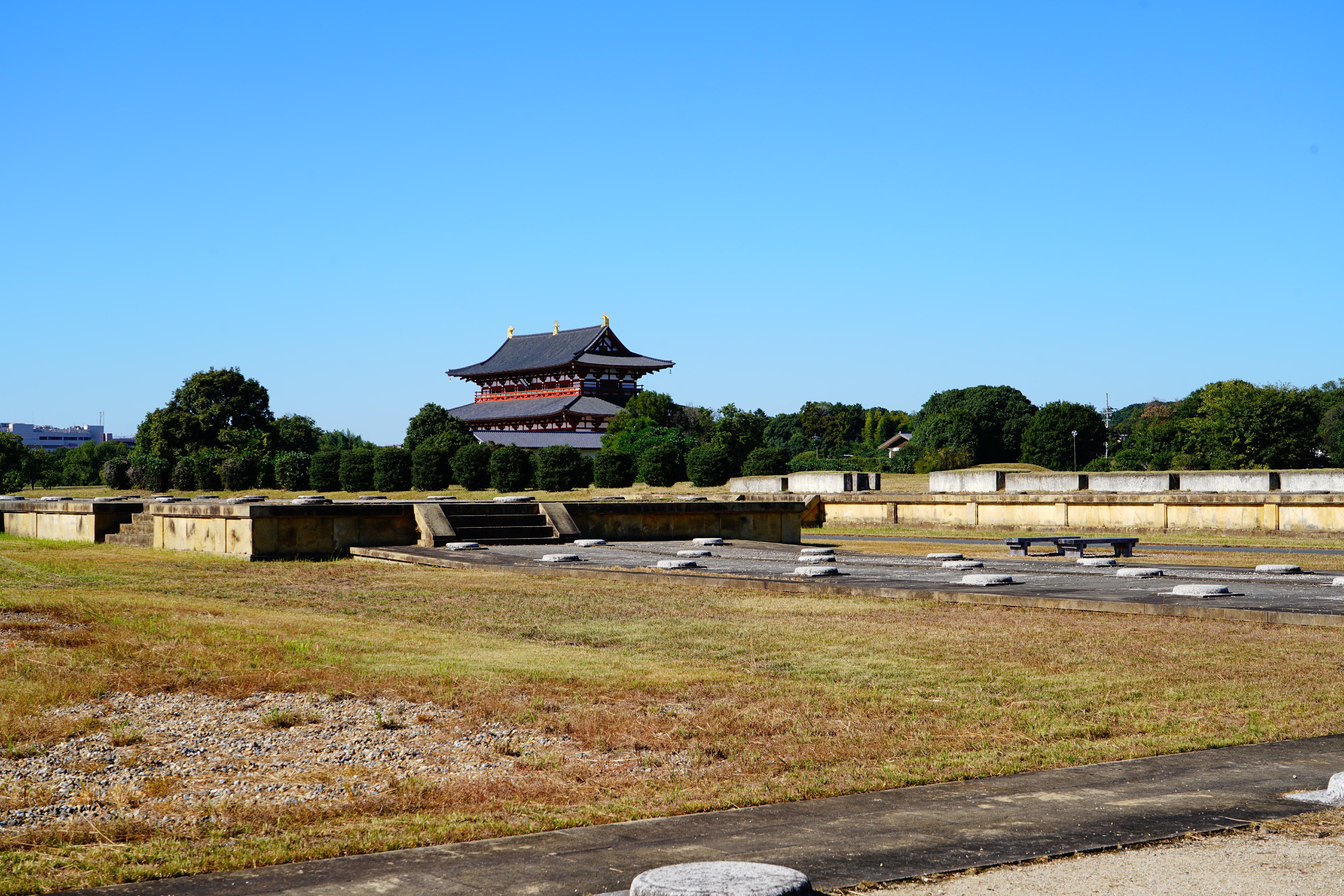
Nara Imperial Palace
The Japanese imperial family (which changed based on who kicked whose ass) moved around Japan a lot. In 710 AD, the first stable and permanent capital was established in Nara Japan, now this is known as the Nara Period, almost 100 years before the Kyoto Period started. I didn't even know the capital was here myself until I stumbled across it looking for a place to see while I was staying at a JW hotel.The was a turning point in Japanese leadership and legal styles, copying a lot of what China was doing. Buddhism became the official and very intertwined religion of the state. Things were better in Japan but still not great for the peasant class. A turning point from the localized leaders to a true countrywide establishment.
The Arrival
Well to get to Nara, you take a train. I wouldn't curse driving here on anyone but my worst enemies (if you want to know who they are, email me). From the JW Hotel, I just walked west on Omiya-Dori Street. It wasn't that far, nor that difficult.Palace Grounds
So the main grounds are a ways of a walk into the park. You head north, on a very precise grid patterned land. The paths aren't, but, what respect do these kids have for history these days?Excavations
Not everything (ok, actually a very low percentage) has been rebuilt. You can see excavations and museums around those in the eastern part of the park.Other Museum Buildings
There are quite a few museum buildings around the site, and I suggest going to them all, as you cannot get the full story by skipping them.
This grassy area near the entrance is supposed to be a great example of natural beauty
Many modern art displays in it now"
Peaking up through the grass you can see the gatehouse
Why they built a palace on an active railway confuses me
The southern entrance control point gatehouse
You wait here until his majesty is ready for you
Presentation area, designed to awe
How the palace and courtyard originally looked
The main building, the Palace
Details of the roofing, those ends of the poles say this belongs to the Emperor
Important audiences held in the throne room
Where the head honcho would sit"
Can you dig it man? They could
Not a lot of the wood survived 1300 years in these spots
A private pond
These circles were stable and insulated points for the wooden poles
This building contains the construction methods and items
This is how the posts transferred to beams in a complex but strong method
Special, expensive, details for rooms
Those imperial ownership pole caps up close
End of roof pieces for showing off
Your spot to stand during ceremonies
This hollow tree was used for water storage, I think
As always, ceramics are very important for daily life and dating a find
Here is how your poop was carried away to prevent smell and disease
The largest and main museum building"
A model showing how walkways would be constructed over the pole locations
A more complete model allowing you to visualize easier
An original building post
Many industries are required to build and maintain the palace
The layout now and combined with what was before
How to control and store water
Pipes for water to feed the grounds
Rooms full of many related items
Original surviving pole caps
Ceramics and such